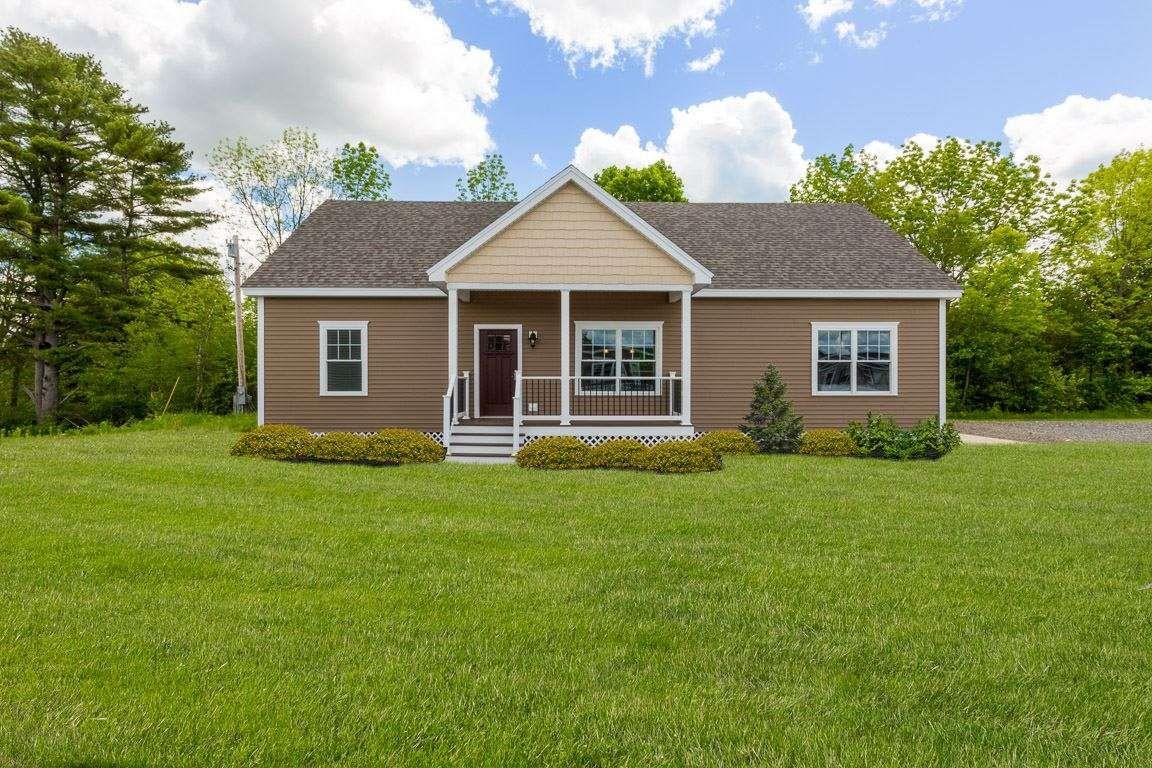
The usual advice on selling a Maine house is simple: list it if you want the most money, take a cash offer if you want speed. That advice assumes every cash offer is a lowball, and plenty are. But not every cash buyer prices the same way, and that one difference can change which option leaves you with more money.
This guide runs the real numbers on three Maine houses in three common situations: a divorce, an inherited house that needs work, and a job relocation. For each one, we compare three paths: listing with an agent, a typical investor's cash offer, and a price-first cash offer, meaning one that starts from the number the homeowner needs. You'll see where each one wins, and how to tell which kind of cash offer you're holding.
Cash Offer vs. Listing in Maine: The Quick Comparison
| Listing with an agent | Typical investor offer | Price-first cash offer | |
|---|---|---|---|
| Time until you're paid | Usually 2 to 3 months or more | Usually 2 to 4 weeks | As little as 10 days |
| How the price is set | What a retail buyer will pay, minus negotiation | A formula based on repairs and the investor's profit | Starts from what you need, then checks whether the numbers work |
| Repairs and cleaning | You handle them | None. Sold as-is | None. Sold as-is |
| Seller costs | Commission, your half of the transfer tax, attorney fees, prep, monthly holding costs | Varies. Some pass closing costs to you | Ours: no agent fees, no closing costs |
| Chance the deal falls apart | Higher. Loans, appraisals and inspections can sink it | Lower, but watch for price cuts after you sign | Lower. No bank approval needed |
| Septic, well, roof or oil tank problems | Often must be fixed before a buyer's loan will close | Bought as they are | Bought as they are |
| Empty house in winter | You pay to heat, insure and plow it until closing | Off your hands in weeks | Off your hands in days |
| Best for | Clean houses that may draw multiple offers, sellers with time | Sellers who just need out | Sellers who want close to full value without repairs, showings or waiting |
The listing and investor timelines are typical ranges from the examples below. The 10-day figure is our own closing timeline, based on what we aim for and get for our clients as cash home buyers in Maine.
What It Means to Sell Your House for Cash in Maine
A cash offer means the buyer pays with money they already have, so no bank has to approve a loan. That one fact explains most of the difference: no lender means no appraisal, no loan underwriting, and no lender list of repairs. It's why a cash sale can close in weeks and why the buyer can take a house as-is.
You'll run into four kinds of buyers when you look into selling:
- Local cash buyers. Companies or investors who buy houses directly, fix them, then rent or resell them. This is what most "we buy houses" signs in Maine are.
- Instant-offer companies (iBuyers). Tech companies that make offers online from a formula. Check whether they in fact buy in your part of Maine; many focus on bigger metro areas.
- Wholesalers. People who sign a contract to buy your house, then sell that contract to a real buyer for a fee. They may never buy the house themselves. More on spotting them below.
- Retail buyers. Families buying a home to live in, usually with a mortgage. This is who you reach by listing.
How Much Do Cash Home Buyers Pay?
It depends on how they price. Most cash home buyers work backward from a formula:
Cash offer = value after repairs − repair costs − buyer's selling and holding costs − buyer's profit
Many also follow the "70 percent rule": they won't pay more than about 70% of the home's after-repair value. That rule is why so many cash offers feel like an insult. It protects the investor's margin first and leaves your number as whatever is left over.
A price-first buyer, like True North Home Buyers, starts at the other end. The first question is what you need from the sale and what the house would realistically net you on the open market. Then the buyer works out whether they can get to that number.
This works because selling for cash removes costs that come out of your pocket when you list: commission, closing costs, months of holding costs and the price cut most buyers negotiate. Those savings close much of the gap between a cash price and a list price.
For example, for a $547,000 house a traditional sale nets about $459,000 after a 6% commission, 2% closing costs, a 7.2% average negotiation discount and 62 days of holding costs, while the cash offer is $510,000 with True North, with nothing taken out.
What Does It Cost to Sell a House in Maine?
The number that matters is your net proceeds: what you keep after every cost of selling. (Your mortgage payoff comes out too, but it's the same whichever way you sell, so we leave it out of the comparisons.)
Here's what comes out of a Maine sale:
- Agent commission. Commissions are negotiable, so get a real quote. Our examples assume 5% of the sale price in total.
- Your half of the Maine transfer tax. Maine charges $2.20 for every $500 of the sale price, split evenly between buyer and seller. The seller's half works out to about 0.22%, or roughly $1,100 on a $500,000 house. Sales over $1 million pay a higher rate since November 1, 2025.
- Closing attorney or title fees. Most Maine closings are handled by an attorney or title company. We assume about $1,500 for the seller's side.
- Getting the house ready. Cleaning, paint, small repairs, hauling away what you don't want. On an older house, this can grow into real repairs once a buyer's inspector or lender gets involved.
- Holding costs. What you keep paying every month until closing: mortgage interest, property tax, insurance, electricity, heat and plowing. In Maine, the heat line is the one people underestimate, and this year it's bigger than usual.
- If you're not a Maine resident: the buyer must generally hold back 2.5% of the price at closing as a prepayment toward Maine income tax on sales of $100,000 or more. It's not a cost if you owe no tax, but it is money you won't see on closing day unless you apply for an exemption ahead of time.
With a cash sale, most of these costs can drop away, but not always. Some cash buyers still pass closing costs or fees to you, so the headline offer isn't what you keep. Our terms at True North are no agent fees, no closing costs, no repairs and no holding costs. Whoever you talk to, get the cost terms in writing before you compare offers.
The Maine Housing Market This Fall: 3 Things That Changed
Three changes this fall shift the math in favor of listing for some houses and cash for others.
1. Fewer sales, but prices are holding. Maine single-family sales fell 10.09% in August 2026 compared with a year earlier, while the statewide median price rose 4.31% to $424,550. In York County, the median for June through August was $589,500, up 7.18%. The Realtors' own president put it this way: with more homes for sale, buyers have more leverage, and the homes that sell are the ones priced right for their condition.
What it means for you: a clean, well-priced house still sells well. A house with problems now competes against more choices.
2. Mortgage rates are above 7%. The average 30-year fixed rate hit 7.40% on October 8, 2026, up from 6.30% a year earlier.
What it means for you: fewer buyers qualify, and more deals wobble when a buyer's payment creeps up or an appraisal comes in low. That's a risk you carry until closing day when you list.
3. Heating oil hit a record. Maine's average heating oil price reached a record $6.02 a gallon in late September, about $740 more than a year ago to fill a standard 250-gallon tank. The Natural Resources Council of Maine estimates the average household will pay $1,262 more for heating oil this winter. You can track current prices on the state's weekly fuel survey.
What it means for you: if your house will sit empty on the market this winter, you still have to heat it to protect the pipes. That cost comes straight out of your sale.
Now, let’s just into the cases and see if it makes sense to sell now with a cash home buyer or list your house.
Three Maine Houses, Three Outcomes: Simple Case Breakdown
We picked three of the most common reasons Maine homeowners call us: a divorce, an inheritance and a job relocation. These are composite examples built from typical numbers for the towns we buy in across York County and southern Maine.
Each table shows listing next to two kinds of cash offer: a typical investor offer and a price-first offer like the ones we aim to make. The cash figures are illustrations, not quotes. Every cost is listed so you can swap in your own numbers, and the mortgage payoff is left out because it's the same either way.
House 1: A Shared Home in Saco After a Divorce
The house: A three-bedroom cape on town water and sewer. Updated kitchen, roof about ten years old, nothing a buyer's inspector will flag. It's worth about $500,000.
The owners: A couple who are divorcing. Their agreement says the house gets sold and the money split. One of them has already moved out, both are still paying the mortgage, and every decision about the sale needs two signatures.
| List it | Typical investor offer | Price-first cash offer | |
|---|---|---|---|
| Sale price | $495,000 | $425,000 | $465,000 |
| Commission (5%) | −$24,750 | $0 | $0 |
| Seller's half of transfer tax | −$1,089 | Varies | Paid by buyer |
| Attorney and title | −$1,500 | Varies | Paid by buyer |
| Paint, cleaning, small fixes | −$4,000 | $0 | $0 |
| Holding costs, 2 months at $3,000 | −$6,000 | $0 | $0 |
| What they keep | $457,661 | Up to $425,000 | $465,000 |
| Time until paid | About 60 to 75 days | 2 to 4 weeks | About 10 days |
The outcome: Against a typical investor offer, listing wins by about $32,700, and that's the comparison most articles stop at. Against a price-first offer, the cash sale comes out about $7,300 ahead and two months sooner, with no showings and no risk of a buyer's loan falling through.
In a divorce, listing also carries a cost the table can't show. Every showing, price cut and repair request is one more thing two people who are splitting up have to agree on. A fixed cash number on a set date is simpler to divide.
Listing can still win here. If the two of you agree easily and the house draws several offers, a $520,000 sale would leave about $481,000, roughly $16,000 more than the price-first offer.
Our advice: get both numbers before you decide. Ask an agent for a realistic net and ask a cash buyer to show you how their offer compares. If the cash offer looks like the investor column, list the house. If it's at or above your realistic net, the sure number usually makes the split easier.
House 2: An Inherited 1958 Ranch Near Sanford That Needs Major Work
The house: A three-bedroom ranch on a private well and septic system. The septic is failing, the roof is original, there's an old oil tank in the basement, and Mom's belongings fill every room. Fully fixed up, it would be worth about $360,000.
The owners: Two siblings who inherited it. One lives in Connecticut, one in North Carolina. The house has been empty since summer.
Listing is harder than it looks for this one. Most buyers need a mortgage, and lenders won't lend on a house that fails their property standards. FHA's rules, for example, cover the roof, peeling paint in homes built before 1978, and septic systems. A failing septic system alone stops most financed buyers. Replacing one in frozen ground, from out of state, is slow and expensive.
So if the siblings list it as-is, the buyers who can close are mostly investors, the same people who'd make a cash offer. Listing just adds a commission and a few months of waiting.
That leaves four real choices:
| Fix it, then list | List as-is | Typical investor offer | Price-first cash offer | |
|---|---|---|---|---|
| Sale price | $360,000 | $250,000 | $230,000 | $245,000 |
| Commission (5%) | −$18,000 | −$12,500 | $0 | $0 |
| Seller's half of transfer tax | −$792 | −$550 | Varies | Paid by buyer |
| Attorney and title | −$1,500 | −$1,500 | Varies | Paid by buyer |
| Repairs: roof, septic, oil tank, updates | −$64,500 | $0 | $0 | $0 |
| Cleanout | −$4,000 | −$4,000 | Varies | Buyer handles it |
| Holding costs | −$8,700 (6 months) | −$5,800 (4 months) | $0 | $0 |
| What they keep | $262,508 | $225,650 | Up to $230,000 | $245,000 |
| Cash needed up front | About $69,000 | About $4,000 | $0 | $0 |
| Time until paid | 6 months or more | About 4 months | 2 to 4 weeks | About 10 days |
The holding line is where Maine winters bite. About half of it is heating oil. An empty house still has to stay warm enough to keep the pipes from freezing, and at this fall's record prices, that's roughly $700 a month. The rest is property tax, a vacant-home insurance policy, electricity and plowing.
The outcome: A price-first offer puts about $19,350 more in the siblings' pockets than listing as-is, and about $15,000 more than a typical investor offer, with the winter risk gone in about ten days. Fixing it first still nets about $17,500 more than the price-first offer, but only if they can put $69,000 in, manage a septic job and a roofer from hundreds of miles away, and wait until spring.
Our advice: A cash sale is the cleaner answer and it's worth getting more than one cash offer, because the spread between buyers on a house like this can be $15,000 or more.
House 3: A Kennebunk Family Home and a Job Relocation in 30 days
The house: A four-bedroom colonial in good shape, worth about $620,000.
The owners: One of them starts a new job out of state next month. Keeping the Kennebunk house costs them $4,500 a month: mortgage, property tax, insurance, heat and electricity. They'll be paying rent or a second mortgage on top of that.
| List it | Typical investor offer | Price-first cash offer | |
|---|---|---|---|
| Sale price | $612,000 | $545,000 | $560,000 |
| Commission (5%) | −$30,600 | $0 | $0 |
| Seller's half of transfer tax | −$1,346 | Varies | Paid by buyer |
| Attorney and title | −$1,500 | Varies | Paid by buyer |
| Prep and staging an empty house | −$3,000 | $0 | $0 |
| Holding costs, 3 months at $4,500 | −$13,500 | $0 | $0 |
| What they keep | $562,054 | Up to $545,000 | $560,000 |
| Time until paid | 3 months or more | 2 to 4 weeks | About 10 days |
On paper, listing beats the typical investor by about $17,000 and the price-first offer by about $2,000. But that assumes the house sells and closes in exactly three months. Every extra month costs another $4,500, so the real question is how long the house will take to sell.
Extra months you can afford to wait = (listing net − cash net) ÷ your monthly cost to keep the house
Against the typical investor offer: $17,054 ÷ $4,500 = about 3.8 extra months. Listing still wins if the house sells and closes within roughly 6 to 7 months in total.
Against the price-first offer: $2,054 ÷ $4,500 = less than half a month. If the sale takes even two weeks longer than planned, the cash offer comes out ahead.
Three things can eat that cushion fast:
- A buyer's loan falls through. With the 30-year rate above 7%, a small rate jump or a low appraisal can sink a deal weeks before closing, and you start over.
- Two housing payments at once. If the family needs a mortgage in their new city, the lender will usually count the Maine house payment against them until it's sold.
- Winter. Maine's Realtors already describe a seasonal slowdown in sales as fall sets in. A house that doesn't sell before the snow has to be heated the whole time it waits.
The outcome: Against a typical investor offer, listing is the better bet if the family can comfortably carry both homes for six months. Against a price-first offer, the cash sale wins unless the house sells fast and close to asking, and the family gets to start their new job without a second house payment.
Our advice: Get a written cash offer first, then decide. If the gap between it and your realistic listing net is less than one or two months of carrying costs, the extra months of risk usually aren't worth it. If the gap is bigger, list with a deadline, and ask the cash buyer whether their offer can stay open as your fallback.
Need to Sell Your House Fast in Maine? Find Out Which House Is Yours
Answer these five questions honestly:
- Could a buyer's lender approve the house as it stands today (roof, septic, well, heating system, paint)?
- Can you pay for repairs and prep before you're paid for the house?
- Can you keep paying for the house, including winter heat, for three months or more?
- Can you or someone you trust be there for showings, repairs and inspections?
- Is your deadline more than 90 days away?
Mostly yes: you're House 1. You can list with confidence. Before you sign a listing agreement, get one price-first cash offer to compare with your agent's net estimate. If the two are close, the faster and surer sale may be worth more to you.
Mostly no: you're House 2. A cash sale is likely your best net once you count repairs, holding costs and risk. Compare more than one cash buyer, because the spread can be large.
A mix: you're House 3. Run the break-even test with your own numbers. To get the cash side of that math, you can get a free property value estimate in about 30 seconds and set it next to an agent's pricing.
The Bottom Line
"Cash offer vs. listing" is really two questions:
- How much will you keep
- How sure are you of getting it
A typical investor offers a lot of money for speed, and for a clean house, listing usually beats it. A price-first cash offer closes most of that gap, because you skip the commission, the closing costs, the holding costs and the risk of a buyer's loan falling through. For houses with problems, an empty winter ahead or a hard deadline, it often comes out ahead outright. The only way to know is to put both numbers side by side.
If you're weighing your options in York, Kittery, Wells, Kennebunk, Saco, Biddeford, Sanford or anywhere in southern Maine, we're happy to run both sides of the math with you, even if the answer is "list it." Call us at (603) 207-8960.
Frequently Asked Questions
Can I sell for cash if I'm behind on my mortgage?
Yes. Your loan is paid off from the sale money at closing, and you keep what's left. If your lender has already filed for foreclosure, you can ask for mediation through Maine's Foreclosure Diversion Program, but you have to request it within 20 days of getting the court papers. Vacation and second homes don't qualify.
Do I still fill out Maine's property disclosure if I sell as-is?
Usually, yes. Maine requires sellers to disclose known facts about the water supply, heating system, septic or sewer, hazards like radon, asbestos and lead paint, and flooding. "As-is" means you won't.fix problems. It doesn't mean you can keep quiet about them. Ask your closing attorney whether any exemption applies to your sale.
My house has tenants. Can I still sell it for cash?
Yes. Many cash buyers will buy with tenants in place, so you don't have to empty the unit or work showings around someone's schedule. Leases generally carry over to the new owner. If you'd rather deliver the house empty, Maine has specific notice rules for ending a tenancy, so talk to an attorney before you give notice.
Will I owe tax on the sale?
Often little or none. If you owned and lived in the home for at least two of the last five years, up to $250,000 of profit, or $500,000 for a married couple, is usually tax-free (IRS Topic 701). For inherited homes, the starting value for tax purposes is generally the value on the date of death (IRS Publication 551), so a quick sale often shows little profit. Check with a tax professional.
Is an online home value estimate the same as a cash offer?
No. An online estimate is a starting point built from your address and recent sales nearby. A real offer comes after the buyer sees the house and its condition. With us, the 30-second estimate comes first, and a firm offer follows the walk-through. From there, we can close within 10 days of that assessment.